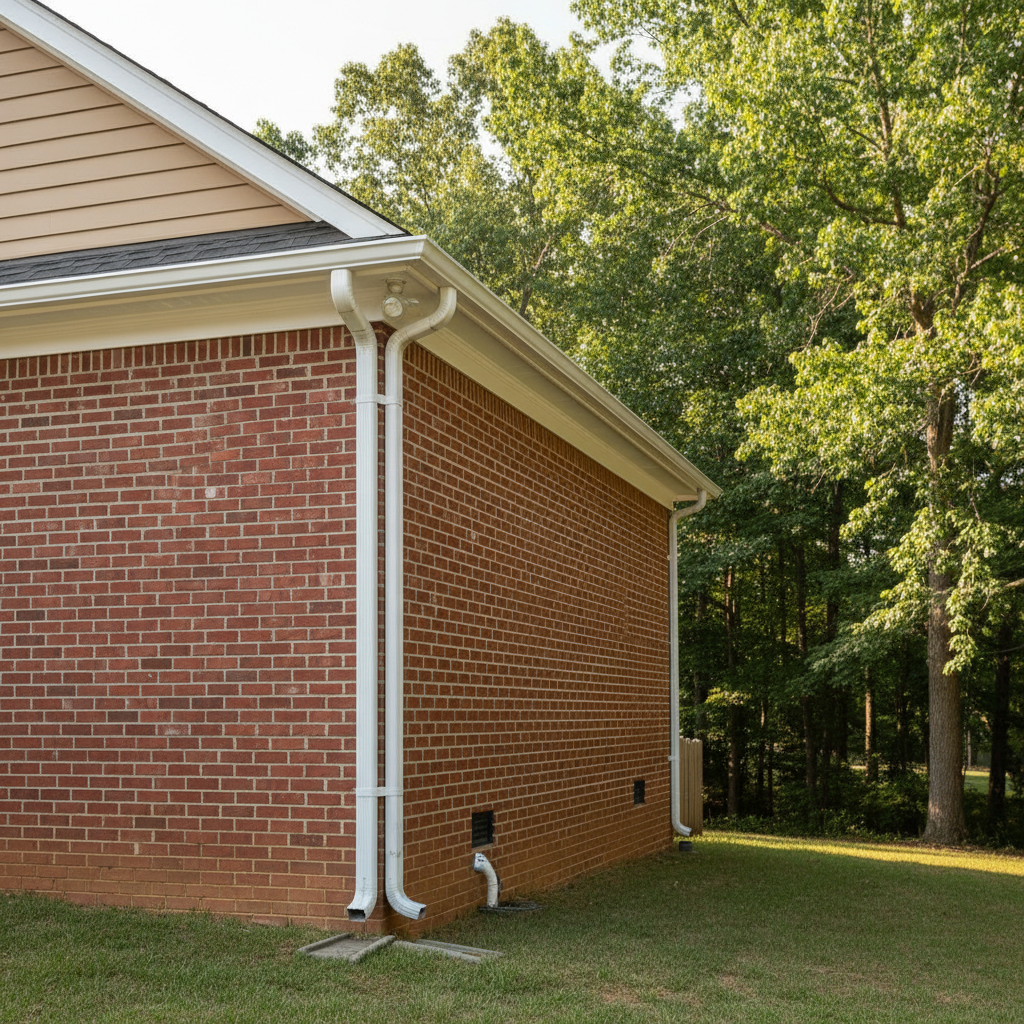
Alright, let's talk downspouts. Most folks think about their gutters, but those downspouts are just as crucial. They're the workhorses that take all that rainwater collected by your gutters and direct it safely away from your foundation. In Durham, with our heavy summer thunderstorms and those long, wet fall seasons, a properly functioning downspout system isn't just a nice-to-have; it's a must-have if you want to avoid expensive water damage.
Extending the Life of Your Downspouts
You want your downspouts to last as long as possible, right? Good. A lot of it comes down to how they're installed and then how you treat 'em. First off, make sure they're properly secured. I can't tell you how many times I've seen downspouts flapping in the wind because a strap came loose or was never put in right to begin with. High winds, especially during those unpredictable afternoon storms we get here, can really tear them up if they're not anchored tight to your house.
Another big one is making sure the water has somewhere to go once it leaves the downspout. If it just dumps right next to your foundation, you're asking for trouble. Get an extension, whether it's a simple roll-out or an underground drain, that carries that water at least five to ten feet away from your house. Ideally, you want it flowing downhill, away from your property. If your yard is flat, or even slopes back towards your house – which I've seen plenty of in some of the older neighborhoods around Duke Forest – you might need to think about a more robust drainage solution. That red clay we have here doesn't drain fast, so standing water is a real problem.
Finally, don't let heavy objects lean against them. I've seen kids' bikes, trash cans, even ladders propped up against downspouts. They're not designed to take that kind of abuse. They're meant to move water, not support weight.
Regular Maintenance: Keep 'Em Flowing
This is where most of the work happens, but it's not rocket science. It's mostly about keeping things clear. You've got to prevent clogs.
- Clear the top: Just like your gutters, the top opening of your downspout can get jammed with leaves, twigs, and shingle grit. When you're cleaning your gutters, always make sure to check the downspout opening. Sometimes a leaf or two can get wedged right at the top and act like a dam, building up debris behind it.
- Flush 'em out: A good flush with a garden hose once or twice a year can do wonders. Just stick the hose down the top of the downspout and let the water run. If water backs up, you've got a clog. If it flows freely out the bottom, you're good.
- Check the extensions: If you have those flexible, corrugated extensions, they're notorious for collecting debris. They can get squashed, too, which restricts flow. Make sure they're clear and aren't kinked. Underground drains need to be checked too; sometimes tree roots or sediment can build up.
- Look for damage: Give 'em a visual inspection. Are there any dents? Missing screws or straps? Are the seams separating? Catching these things early can save you a bigger headache later.
Our climate in Durham means we get a lot of pollen in the spring, and then leaves in the fall. Both are big clog culprits. So, spring and fall are prime times for this kind of maintenance.
Warning Signs of Downspout Problems
Your downspouts will tell you when something's wrong, you just have to know what to look for. Don't ignore these signals:
- Water overflowing from your gutters: This is the most obvious sign. If your gutters are full and water's spilling over the sides, but the gutters themselves look clear, chances are your downspout is clogged. The water just can't get down.
- Water pooling around your foundation: If you see puddles forming right next to your house after a rain, that downspout isn't doing its job. It's either clogged, or the extension isn't directing water far enough away. This is a big one for foundation health.
- Damp spots or mildew on your home's exterior walls: If water isn't draining properly, it can splash back onto your siding or brick, leading to moisture issues. You might see green or black growth, or even staining.
- Sagging or detached downspouts: If a downspout is pulling away from your house, or looks like it's bending under its own weight, it's either not secured properly or it's holding a lot of water due to a clog. Either way, it needs attention.
- Strange noises during rain: Gurgling or bubbling sounds coming from your downspouts when it's raining can indicate a partial clog. The water's trying to get through, but it's struggling.
When to Call a Professional
Look, a lot of this maintenance you can do yourself. But there are times when it's just smarter, safer, or more effective to call in the pros. That's where Durham Gutter Solutions comes in.
- Persistent clogs you can't clear: If you've tried flushing it and it's still blocked, you might have a really stubborn clog, or something like a bird's nest or even a small animal stuck in there. We've got the tools and experience to get those out without damaging your downspout.
- Damaged downspouts: If a downspout is severely dented, ripped, or has separated seams, it's probably beyond a simple fix. We can repair or replace sections, or the whole thing, to make sure it's working like new.
- Improper drainage issues: If water is consistently pooling around your foundation, even after you've checked your downspout extensions, you might have a grading issue or need a more advanced drainage solution. We can assess the situation and recommend the best course of action.
- Safety concerns: If your downspouts are high up and you're not comfortable on a ladder, please don't risk it. A fall isn't worth it. That's what we're here for.
- Underground drain problems: These can be tricky. If you suspect an underground drain is clogged or damaged, it often requires specialized equipment to locate and clear or repair the issue without tearing up your whole yard.
Your downspouts are a critical part of your home's defense against water damage. Taking a little time to maintain them, and knowing when to call for help, can save you a lot of money and stress down the road. Keep 'em clear, keep 'em flowing, and your Durham home will thank you for it.